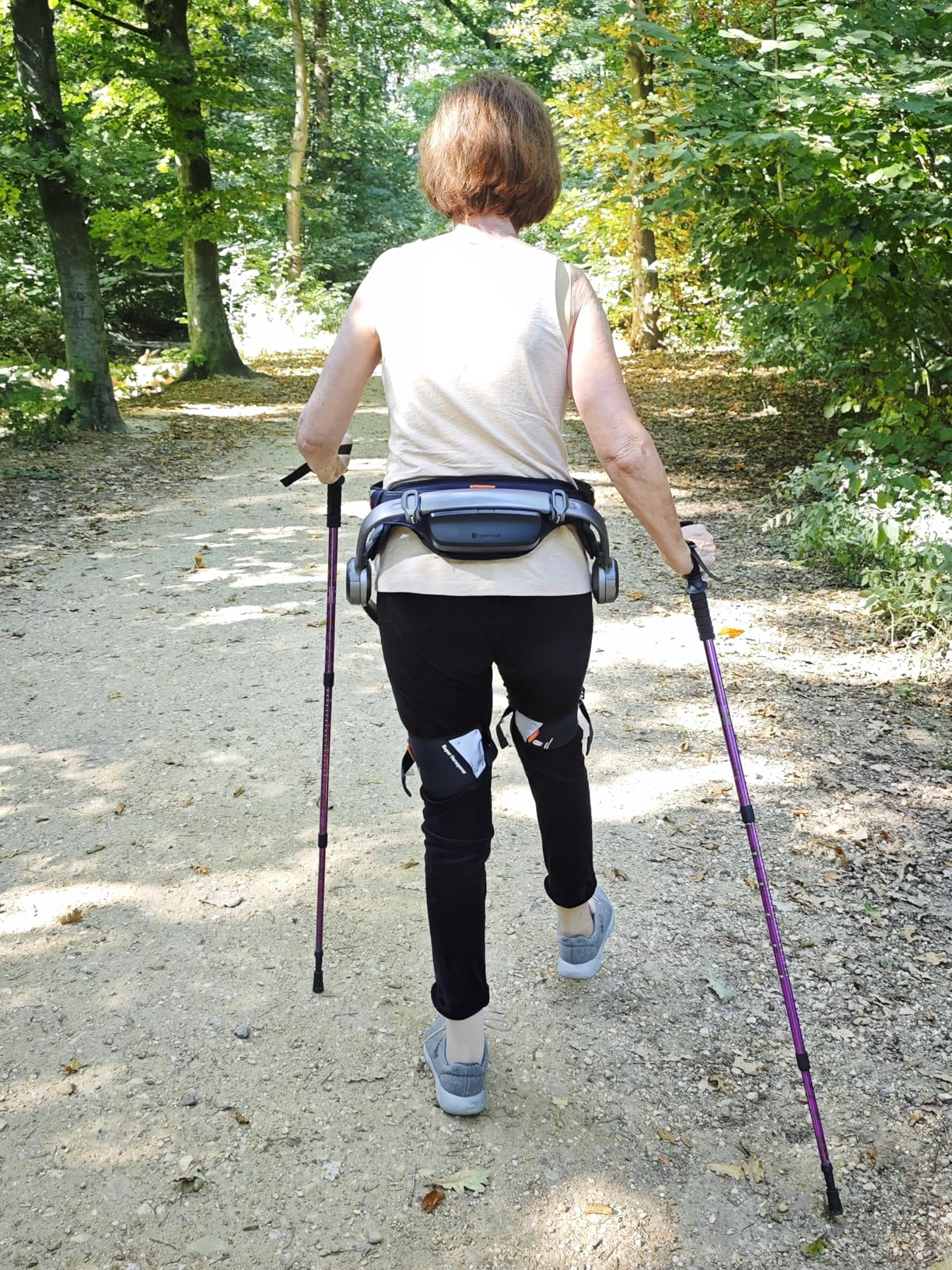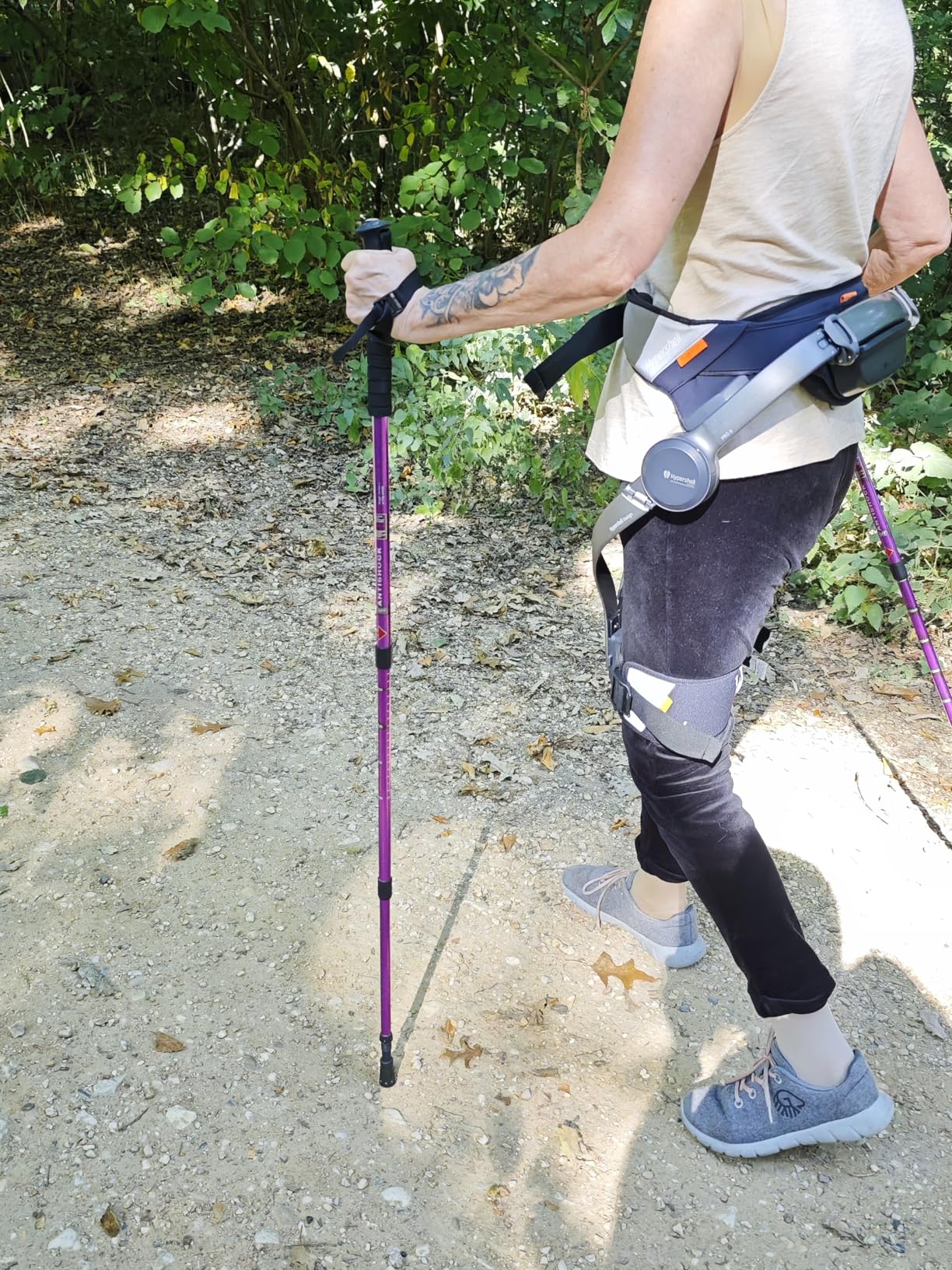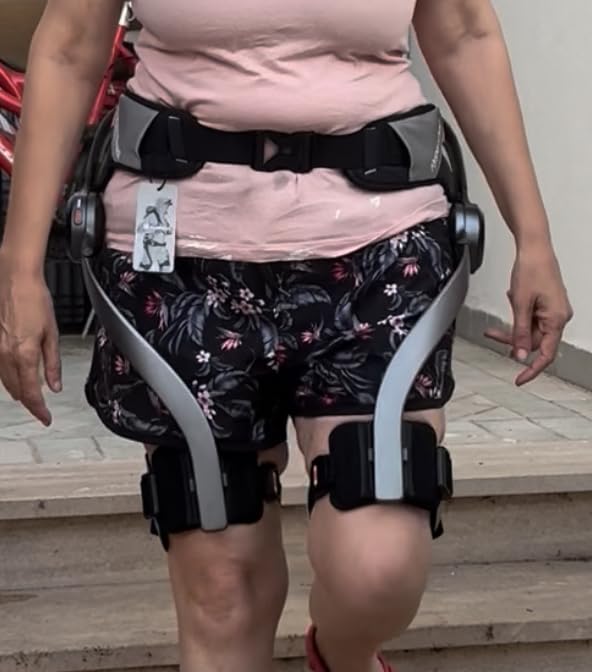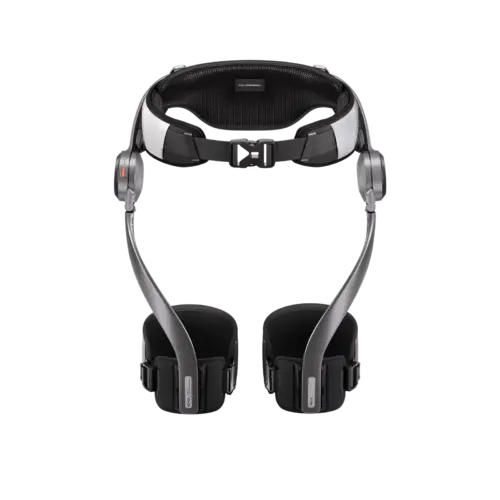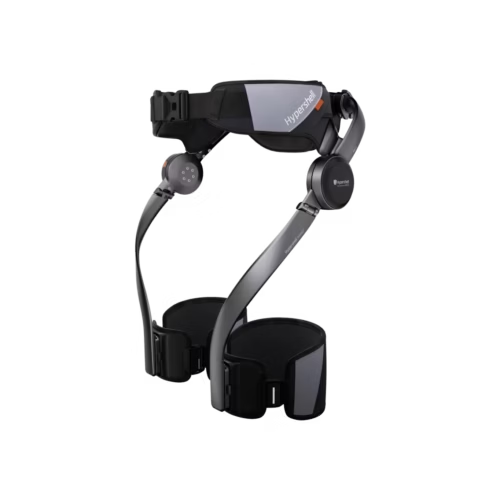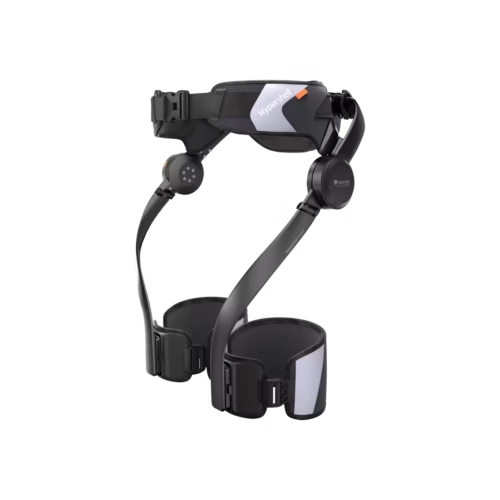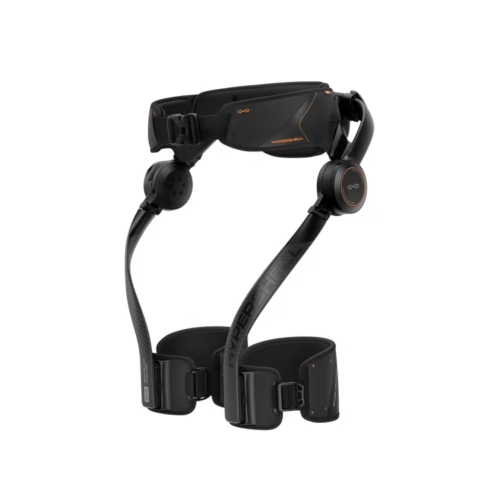
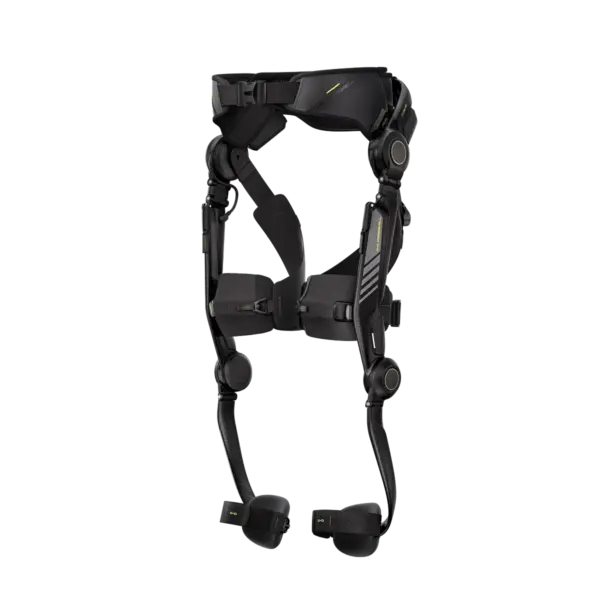









Hypershell Halo – 1,490W full-leg all-terrain exoskeleton
Halo brings hips and knees together in a four-motor full-leg architecture. It supports climbing, descending, sit-to-stand movement and load carrying while staying synchronised with the wearer.
See what makes the difference
Power, range and assistance modes: official visuals help you understand the product before viewing its price.

What changes on the trail
Unified architecture
Assistance is coordinated across the hip, thigh and knee rather than acting at a single joint.
Intent prediction
More than 30 sensors and HyperIntuition 2.0 predict the movement expected over the next 0.2 seconds.
Active knee support
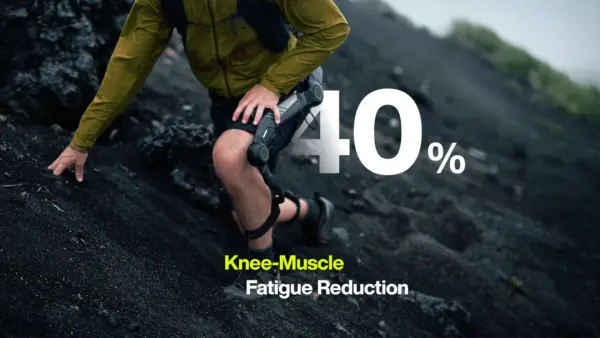
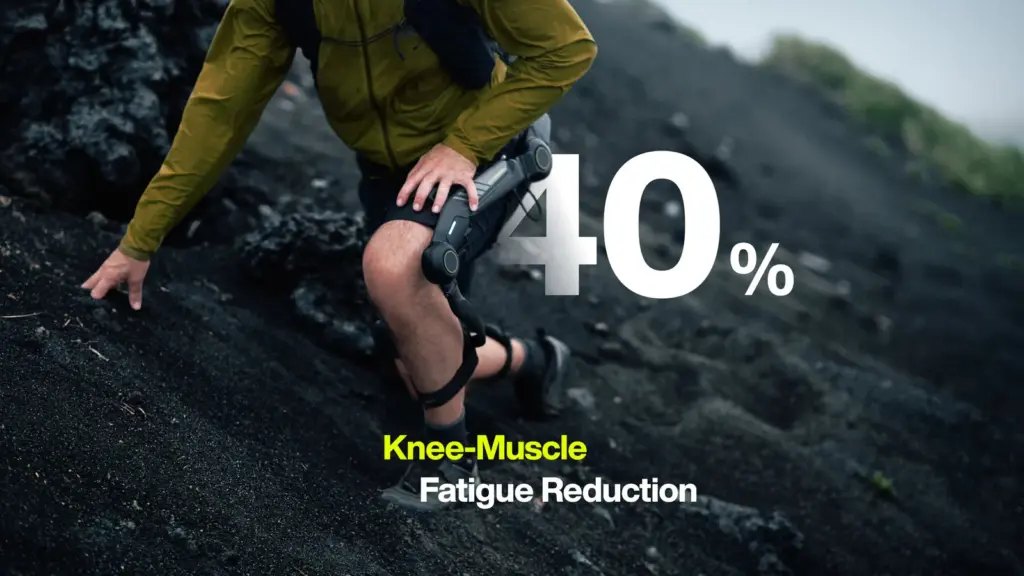
Dedicated knee motors add assistance and impact damping on descents and level changes.
Fast to wear
Once fitted to the wearer, the five-loop system can be put on in around 20 seconds.
Designed to move
Technical specifications
| Battery | 72 Wh |
|---|---|
| Protection | IP54 |
| Operating temperature | -20 °C à 45 °C |
| Folded volume | 8 L |
| Charging | 0–100 % en moins de 1 h 30 |
Frequently asked questions
Is Halo a medical device?
No. Hypershell states that it is a non-medical consumer product. Users must be able to walk, lift their legs and maintain balance independently.
What does the 3.2kg weight include?
It includes the frame and wearing system, but not the battery, which may be carried in a backpack. The rigid frame alone is listed at 2.6kg.
Is the 20km range guaranteed?
No. It comes from treadmill walking at 4km/h, a slight incline and Eco mode at 30%. Terrain, load and assistance level change the result.
Performance figures are published by Hypershell from controlled tests; real-world results vary with terrain, load, fit, physical condition and software.
Hypershell Halo – 1,490W full-leg all-terrain exoskeleton
Halo brings hips and knees together in a four-motor full-leg architecture. It supports climbing, descending, sit-to-stand movement and load carrying while staying synchronised with the wearer.